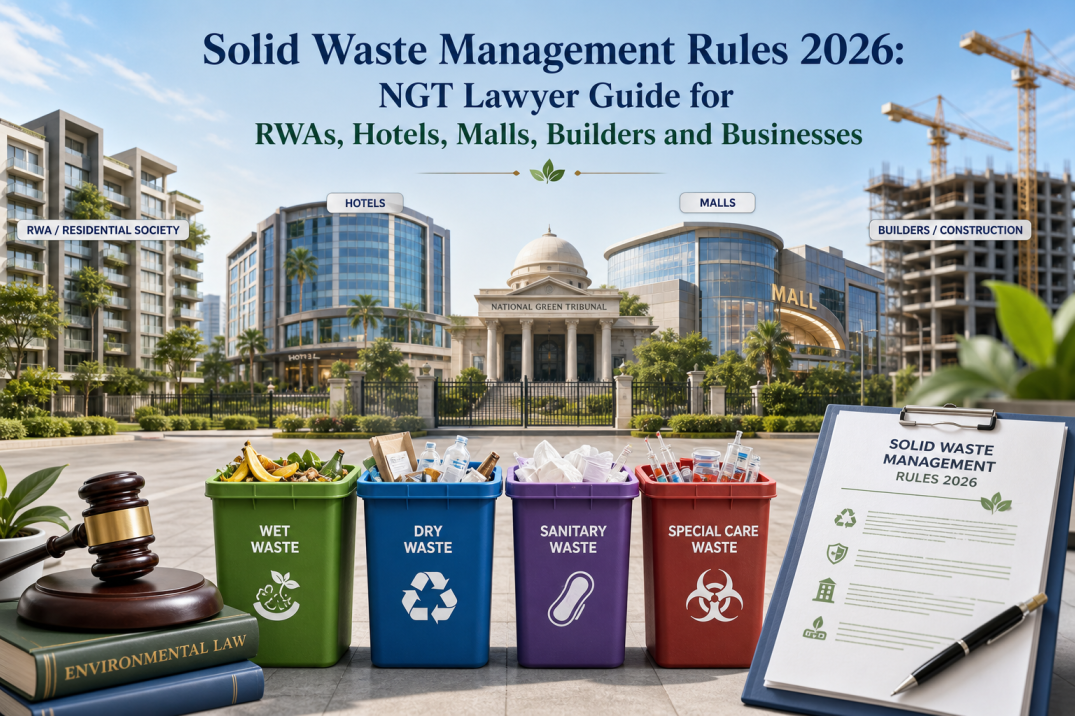
Residents near the society gate complain about foul smell and mixed garbage, an RWA in Noida gets a municipal notice. Waste processing doesn’t happen properly at a hotel in Delhi, the Pollution Control Board conducts an inspection. Authorities question the waste contractor of a mall in Gurugram about segregation records and waste disposal trail. Flat buyers complain about neglected waste segregation systems, blaming a builder in Greater Noida for handing over an unusable residential project. Such situations are no longer household management problems that get resolved quietly between residents and staff. Under India’s Solid Waste Management Rules 2026, waste management has become actionable non-compliance for RWAs, hotels, malls, builders, institutions and bulk waste generators pan-India. In April 2022, the Union Ministry of Environment, Forest and Climate Change notified new Solid Waste Management Rules, 2026, replacing the previous Solid Waste Management Rules, 2016. Effective from 1 April 2026, the rules will be enforced across India under the Environment Protection Act, 1986. Non-compliance can lead to municipal fines, pollution control complaints, environmental compensation, notices from NGT lawyers, reputation damage and operational hassles for a business or society. Resident complaints, inspection notices and municipal technical notices trigger the process. Even one hastily written reply can escalate legal pressure or trigger divergent responses from agencies. This guide breaks down the laws and rules, compliance responsibilities, actionable documents, legal risks and lawful options to respond for RWAs, hotels, malls, builders and businesses under Solid Waste Management Rules, 2026. Handling municipal solid waste is serious compliance because citizens, businesses and regulatory authorities have defined legal roles under the Solid Waste Management Rules 2026. RWAs, hotels, malls and builders need segregation protocols, record-keeping practices, vendor agreements and lawful strategies in place before a resident complaint lands with local municipal authorities, pollution officers or the National Green Tribunal. General complacency about waste handling is becoming legally risky in Delhi NCR, Mumbai, Bengaluru, Hyderabad, Chennai, Kolkata, Pune, Jaipur and other cities where civic compliance is stricter. In Delhi NCR, the issue is more visible because huge volumes of waste are generated from densely populated housing societies, hotels, malls, banquet halls, residential and commercial construction projects. Mountains of mixed garbage, food waste, packaging waste or untreated waste accumulations near housing society gates or hotel entrances aren’t a sanitation problem – it’s legally actionable non-compliance. A typical waste complaint begins quietly. Residents complain about bad smells. Then society WhatsApp groups begin circulating photographs. The municipal authority or pollution control office may ask for records after that. If the municipal body or pollution control office doesn’t take action, residents may file a formal complaint with the National Green Tribunal. By this time, all involved parties have escalated the issue legally. Associations risk internal fighting if residents aren’t properly segregated. Apartment residents may complain about odor, dustbins placed on society premises, or unclear responsibility. Hoteliers may face licence risks, inspection difficulties and brand disrepair if guests share negative experiences. Builders and residential societies face stiff opposition during project handovers if waste segregation systems don’t work onsite. Non-compliance also leads to environmental compensation fines based on India’s Polluter Pays principle. Read more about who can file an NGT complaint against your business or society. CPCB must draft environmental compensation guidelines while state pollution control offices and committees can levy fines for stated non-compliance instances. Instead of treating waste handling as sanitation or housekeeping duty, businesses and RWAs should treat solid waste as a legal compliance file. Environmental compensation may be required for disobedience under the Solid Waste Management Rules, disposal of false records, forged documents, insecure storage of hazardous waste or sudden revisions to consumer patterns. Responsibilities remain with local bodies to collect, segregate and transport municipal solid waste in partnership with Material Recovery Facilities identified as solid waste sorting facilities. Authorized waste processing facilities will have to submit processing details online. Note audit requirements under new Solid Waste Management Rules, 2026. Solid waste management rules explain segregation, collection, transportation, processing, challan format reporting and disposal of municipal solid waste. Waste generators, bulk waste generators, waste contractors, processing facilities and authorities who handle municipal solid waste must learn about their duties. Four main ideas underlie India’s solid waste management rules: These rules mandate segregation of four kinds of waste at source. Wet waste comprises kitchen garbage, vegetable and fruit peels, meat scraps and garden flowers. Dry waste includes plastic covers, paper, metals, glass packaging, wood and rubber items. Sanitary waste includes diapers, sanitary pads, menstrual cups and wrappers. Wrap sanitary waste in secondary bags and store separately. Special care waste consists of paint cans, bulbs, medicines and mercury thermometers. Segregation at source is a primary reason why housing societies, hotels, malls and businesses face municipal or NGT notices. If someone in a housing society didn’t follow instructions, can housekeeping staff claim they aren’t responsible for mixing waste during collection? If contractors pick up mixed waste from apartments or hotels without records, can the management legally challenge oversight allegations? Waste management compliance advice is situational, so businesses and housing societies can consult with solid waste management lawyers who work with NGT lawyers before answering notices or neglecting inspection requests. Waste generators, local authorities, commercial establishments, institutions, RWAs and anybody who handles solid waste may need to comply with Solid Waste Management Rules, 2026. Responsibility doesn’t end simply because an entity hires a vendor to collect waste. Residential apartment societies remain responsible for waste generated in flats. Clause 10 of solid waste management rules require CHS and RWAs to create rules for housekeeping staff to follow solid waste management duties. Urban local bodies include municipal corporations, council members, nagar panchayats and town panchayats. Large commercial complexes, businesses and institutions meet definition of bulk waste generators. State Governments define additional categories of bulk waste generators based on location. Bulk Waste Generators include entities with any of the following: Businesses and RWAs should read solid waste management rules in full to verify duties specific to their operations. State pollution control offices and pollution control committees can issue fines to Bulk Waste Generators who aren’t compliant. Here is how solid waste management responsibility applies to businesses. RWAs are responsible for waste generated by apartment or society residents. Owners are responsible for waste generated at malls or hotels until they appoint a Responsible Waste Generator. Builders and developers must handle construction waste, and project handover waste until they pass responsibility to the buyer society or RWA Hospitals must handle biomedical waste generated within their facilities. Hospitals generate dry waste, wet waste and biomedical waste. Markets generate wet waste, dry waste, packaging waste and sanitary waste. Legal compliance under solid waste management rules boils down to segregation, proper records, designated responsibilities and lawful reply strategies. Visible segregation of wet waste, dry waste, sanitary waste and special care waste is the first step. Bulk waste generators also need to understand Extended Bulk Waste Generator Responsibility. As per Rule 15 of SWM Rules, 2026, bulk waste generators must treat wet waste as far as possible. Bulk generators must obtain a certificate of on-site wet waste processing where composting or anaerobic digestion isn’t possible, from the local body or technology centre. Central Government must evolve a mechanism to accredit technology centres for extending technical support for on-site processing of wet waste. Online compliance and documentation will be visible to regulators soon. Authorities must monitor construction and demolition waste through the Centralised Online Monitoring System. Until SWM Rules enforcement goes into full effect, businesses can assess actionable risk through waste law compliance checks. Municipal fines, consumer complaints, brand disrepair, corrective action and legal cost are possible risks when municipal authorities or NGT lawyers become involved. Gross violations of waste management rules that may lead to legal notices include: Social media, photographs and unchecked nuisances are examples of solid waste management violations that escalate quickly. Actual liability for waste management violations will depend on specific facts. Businesses can review company protocols with a corporate lawyer specializing in environmental law. The Environment Protection Act, 1986 empowers government authorities to create rules and regulations for handling hazardous and non-hazardous waste. India’s NGT Act was enacted under Section 3(1)(b) of the Environment Protection Act, 1986. Section 15 prohibits any person from handling or dealing with hazardous waste, if he fails to comply with any conditions of approval, authorisation or registration or contravenes these rules. Don’t rely on informal advice to understand solid waste management responsibilities. Actual duties will depend on types of solid waste your business handles, location of your commercial complex or residential society, whether you fall within the definition of bulk waste generator, if employees, vendors or homeowners handle waste generation or disposal on site, and other specific facts. Avoid firefighting when lawyers send a legal notice. Digitally verify your actionable compliance items with documented records first. Illegal dumping, choked drains and leaks, untreated waste building-ups, leachate seepage, citizen complaints, inspector raj behaviours and inadequate infrastructure can start NGT allegations. Rejecting legitimate grievances, concealing evidence during inspections and falsifying compliance documentation are legally questionable practices that lead to larger fines or NGT cases. If the matter reaches the National Green Tribunal, citizen lawyers file complaints under Section 22 of the National Green Tribunal Act. Don’t let compliant citizens become harmful citizens. Checklists, evidence and online reporting files can be handy during inspections. Consult a lawyer after receiving a legal notice. Some common triggers are: Mixed waste collected despite claiming segregation Garbage dumped on vacant plot/open land/drains Dry waste or plastic waste burning Unprocessed wet waste from hotels/food courts/societies Absence of authorised vendor record No arrangement for composting/processing bulky waste Waste contractor’s failure to manage waste Sanitary waste mixed with regular dry waste Special care waste stored without safe collection system Residents complaint against RWA/builder Municipal notice received and ignored or replied casually Pollution control board inspection with adverse observations/recommendations Hotels and restaurants require careful waste handling even in hill stations and islands. The Rules state, “… hotels and restaurants shall undertake decentralised processing of wet waste generated by them in compliance with the norms prescribed by the SPCBs or PCCs, as the case may be, in such States…” This implies customisation of compliance approach based on local issues and the frame of reference provided by the concerned authority. If you or any other party is facing an NGT matter already, waste compliance should not be dealt with casually like a municipal letter. NGT proceedings have a different flavour. Inspections reports, committee inspections, orders for compliance affidavit, environmental compensation and directions to public authorities / private parties are common. For more on the NGT route from a litigant perspective, readers may also like NGT Tribunal lawyer support and what is NGT Act 2010 guide for India. RWAs and apartment owners associations should view waste compliance as part of their governance responsibility. Segregation systems, resident notices, collection records, vendor management, records of processing wet waste (if any), handling complaints and evidence of corrective actions are all part of documenting your due diligence. Any housing society will feel pressure from two ends. The municipality / authority is one. Residents are the other. Legal troubles begin when residents bring evidence such as photographs, emails, WhatsApp messages or a trail of repeated complaints to show that the RWA knew but didn’t act. A practical compliance framework for RWAs may include – but is not limited to – the following tasks: Often RWAs try to push all the blame on residents. Resident behaviour is part of the problem, yes. But the managing committee cannot just wash their hands off the issue. If waste is segregated at the flat level but get mixed after floor-wise collection, you may still run into trouble. Builders often contribute to RWA risk too. Sometimes societies are handed over with inadequate space for waste processing. Sometimes there is no designated collection point. Sometimes the composting area is non-functional or visibly dirty. Sometimes responsibilities are blurred between builder and maintenance agency. In such cases, it is useful for the RWA to keep their handover papers, maintenance contracts, layout approvals and correspondence with builder handy. Lastly, if residents are finding their garbage dumped, neglected or see inaction from municipal authorities, it may also turn into an environmental rights issue. Readers looking for a citizen-sided perspective may read about Role of an NGT lawyer in protecting environmental rights in India. Hotels, malls and commercial establishments face visible garbage. Because of the high-volume and public nature of waste in hotels and malls, there may be swift municipal action. Food waste, packaging waste, customer littering, sanitary waste from bathrooms, housekeeping waste and special care disposal can all lead to legal exposure if hotel management does not have segregation practices, processing records and authorised vendor arrangement. Hotel kitchens, banquet operations, restaurants and room service all generate wet waste every day. Organic waste from a hotel has to be handled systematically. Responding to an inspection notice with a casual reply may come across as defensive, not credible. Malls have additional challenges because of multi-tenants. Food courts, retail stores, housekeeping staff, toilets, parking lanes and events will create distinct waste streams within a mall. Mall management will need to work with tenants, vendors and internal facility teams. Commercial complexes, business parks also run into the problem of responsibility mapping. Owners blame tenants. Tenants blame facility houses. Facility house keeps blaming contractors. Contractors will blame municipal vehicle came and took everything. At inspection or adjudication stage, this chain of blame may not hold up if paperwork and evidence are lacking. Hotels malls and commercial establishments should at least prepare- The customer-facing nature of hotels and malls means the business impact of poor solid waste management goes beyond legal risk. Customers see hygiene, smell and garbage piled up in common areas. Tenants complain when garbage is around their shops. Reputation risk, loss of repeat guests/customers, future business and licence approval risks are very real. Any businesses already facing orders for inspection, environmental compensation or threat of closure should consult a lawyer before sending in that strongly-worded email reply. Make sure your reply does not inadvertently admit to irrelevant facts or avoid addressing the actual legal issue. Businesses and owners who want specialised environmental support can hire environmental lawyers who can guide them on solid waste compliance alongside industrial pollution laws, consent requirements, industrial projects and environment regulations. Builders and developers should plan for waste compliance from the planning stage rather than after flat possession. Large layouts, townships and mixed-use projects will require working closely with vendors, setting up processing infrastructure if mandated by local bodies, dedicating space for waste management systems and clarity over handover responsibilities before the municipality marks the project complete. Builders may be accused by residents, RWAs, civic authorities or environmentally-conscious complainants that society was handed over without an adequate system in place. Complaints can mention – Townships and larger developments face multiplied risk. More residents equal more waste. Hotels, commercial shops, clubs, societies for schools and children, large parking areas also contribute to waste. External vendors like spas or salons generate their own waste. If the builder promised garbage processing plants, pool sides or waste collection areas in your documents but has not made them visible/accessible/fuctional, residents will use those documents to strengthen their case. Builders should preserve the following documents wherever applicable: If you’re a resident, hotel owner, mall manager or businessman looking for lawyer support on solid waste management, your first task is to organise documents. Evidence decides the quality of your legal response. Here’s a free checklist that you can download and use: Documents needed from RWAsHousekeeping staff training records, Bin photos before and after cleanup, Minutes of RWA meetings documenting waste complaints/grievances. Documents needed from Hotels Daily log of collection maintained by staff, Vendor contracts, Updated photographs of garbage rooms Documents needed from Malls Tenant agreements highlighting responsibilities, Central waste management area photographs Documents needed from Builders SANction plans and layout showing waste processing/plants, Solid waste management plan if submitted, Handover papers/receipt given to RWA Negligence is easy to prove if the complaint side has all these handy. Download this list and get your documents in order before drafting that reply. Solid waste compliance is about having the right systems, records and managing resident relationships. Before sending replies or arguing with authorities, understand what documents you have that prove your systems are working. Appearing in person before the municipal authority, court or NGT may also help you clarify your side quickly without getting into a long-paper battle. Failure to keep records, environmental damage concerns and guest/customer complaints add layers of risk. No. Organise your evidence first. Sometimes documents and records are enough to send a strong reply. If the matter progresses to NGT, you may need lawyer support. No. You need proof. You cannot go against inspection photographs and submitted documents with just words. You should include supporting documents. This also applies to petitions filed before NGT. Reply affidavits should be supported by annexures and your RWA defense. A proper legal response will explain the systems you have, gaps you are aware of, corrective action you have taken or plan to take and it will ask the authority politely to review your compliance efforts and grant you a fair chance. A casual reply merely says ‘it is not true’. Builder can send supporting documents if required. But as an RWA you should coordinate your own reply, compile records and meet the authority yourself.Solid Waste Management Rules 2026: NGT Lawyer Guide for RWAs, Hotels, Malls, Builders and Businesses
Why Should You Care About Solid Waste Management Rules 2026 in India & Delhi NCR?
Key Solid Waste Management Rules, 2026 Facts at a Glance
Understanding Solid Waste Management Rules, 2026
Who Needs to Comply?
Meeting Solid Waste Management Rules 2026 for Businesses, Hotels & RWAs
The Risks of Non-Compliance: Responding to Municipal Notices or NGT Lawyers
Legal Foundations of Solid Waste Management Rules Compliance
How Does Non Compliance Lead to an NGT Case or Environmental Lawyers?
Role of RWAs and Group Housing Societies
Responsibilities of Hotels, Malls and Commercial Establishments
Role of Builders, Developers and Townships
How Environmental Lawyers Can Help
Documents Needed: Solid Waste Complaints and Replies
Select Category DOCUMENTS TO PREPARE Notices & Authority Records Municipal notice, SPCB/DPCC notice, Inspection report, Hearing notice, Direction/Penalty notice Proof of Waste Handling Waste collection agreement, Authorised vendor details, Handover receipts, Collection logsheet / frequency chart Evidence of Segregation Bin photographs, Floor wise instructions / paintings, Notices to residents, Housekeeping staff training certificates Waste Processing Records Composting records / receipt, Wet waste processing records, Bio-methanation tie-up / agreement, Processing receipts Internal Governance matters RWA minutes / resolutions, Builder handover resolution, Facility management agreement copy, Notices to tenants History of Complaints Complaints received from residents / neighbors, Photographs, Emails, WhatsApp forward message summary, Complaint replies Your Response to the Complaint Corrective action plan, Compliance report submitted, Draft of your reply, Representation to authority Conclusion
FAQs
Do I need to appoint a lawyer each time the municipality sends me a notice?
Can I deny the municipal inspection observation as untrue because our housekeeping staff says otherwise?
How do I respond if the RWA secretary sent a reply but didn’t include our minutes or vendor records?
What separates a casual reply from a proper legal response?
Can my builder send a solid waste reply on behalf of my society?
There's no reason for concern. There is no difficult-to-understand legalese.
Someone who has helped many people with the same problems gives you clear, honest advice. We want to make the legal process easy to understand and use for everyone.
Schedule Your Consultation