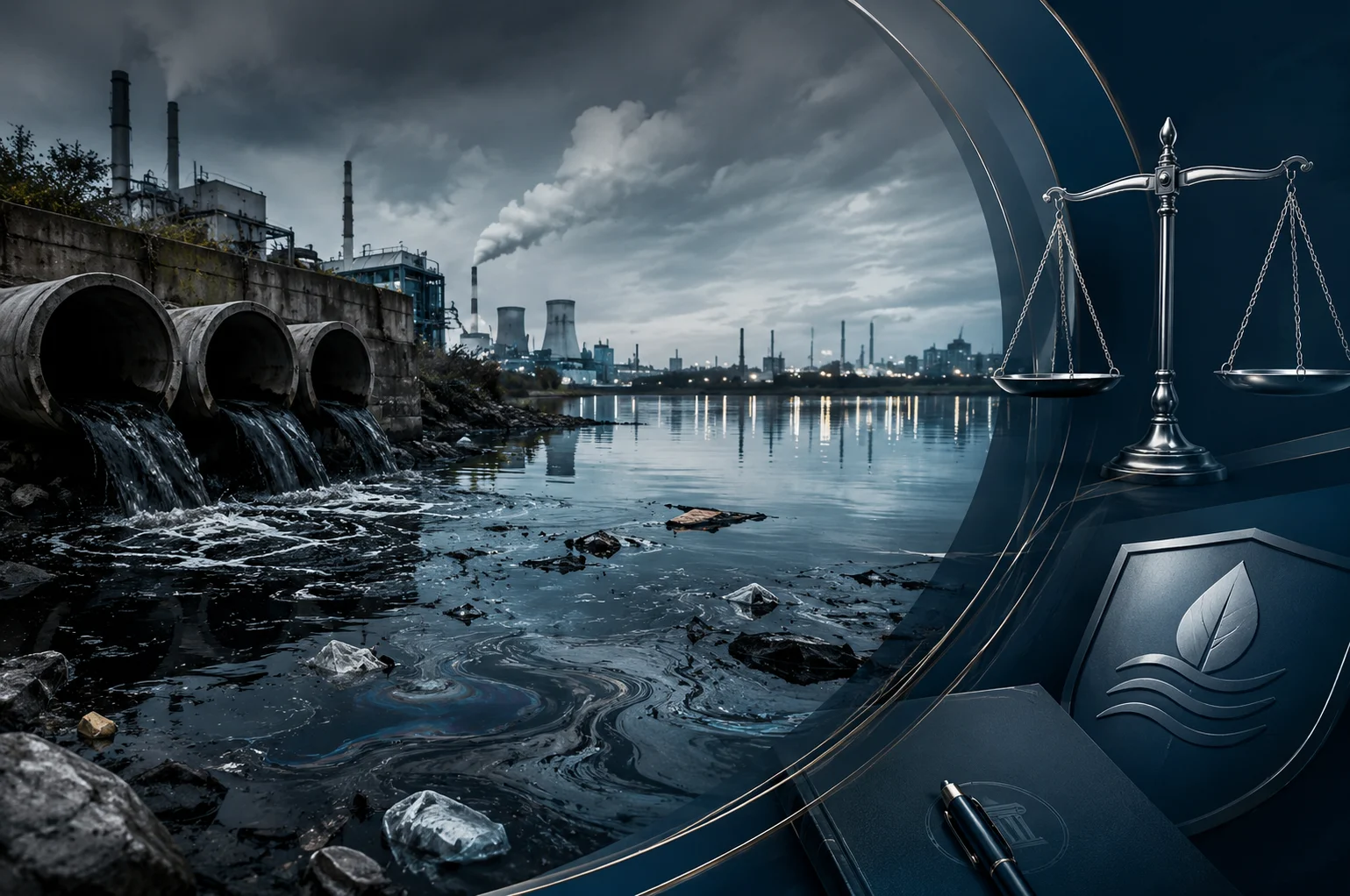
Dirty water does not seem like a “legal problem” on Day 1. Day 1 may be noticing an odd smell near the drain. Day 2 may involve seeing a weird colour near the borewell. Day 3 may bring you a dead fish floating in your pond. When families notice sewage flowing into their lane or factory outlet flowing into a canal at night, they have a question: what can we do about it legally? Can we file a complaint? Whom should we complain to? Will someone take action? Can the factory operations be stopped? Can RWAs, residents, shop owners, farmers, hotels, housing societies, companies, institutions or schools file NGT cases on water pollution? Water Pollution Complaint Lawyers help affected parties translate these concerns into a legally structured document. Whether it is a complaint to government authorities, notice to nearby businesses, representation to civic agencies, NGT Application or reply to a compliance notice. Litigation related to water pollution in India usually mentions the Water (Prevention and Control of Pollution) Act, 1974. It may also involve the Environment (Protection) Act, 1986, National Green Tribunal Act, 2010, municipal laws, consent terms, sewage treatment rules, industrial discharge norms, groundwater facts, and lab reports as evidence. The Water Act, 1974 is an act of the Indian Parliament that provides for the prevention and control of water pollution. India Code says this law was enacted on 23 March 1974 and assigns it the short title – Water (Prevention and Control of Pollution) Act, 1974. Clients typically contact NGT Lawyers when they have made several representations to the local authority, factory management, builder, municipal corporation, sewage board, pollution control office, etc., but meaningful action is not seen. Advocate BK Singh tries to keep his environmental and NGT work fact-focused. Complaints must be legally coherent and factually accurate enough to be understood by both lawyers and technical experts. Speed matters in water pollution disputes. However, rushing also leads to mistakes. Often an emotionally written complaint with allegations but no supporting facts may get disregarded. Strong complaints often narrate how the pollution is happening, from where, into which drain or water body, affecting which homes or farms, harming health or livelihood, who may be responsible, what rule is broken, and what relief is needed from which authority. Facts become doubly important if you plan to file NGT cases. In National Green Tribunal matters, Advocate BK Singh works closely with clients to build a stronger factual matrix before filing. This may include affording time for labs to get water testing reports, organising site photographs with proper geolocation and date stamp, visiting the pollution control board office to learn about consent terms and compliance history of nearby industries, sewage plants, or project owners. The Tribunal is constituted for expeditious disposal of cases. Water pollution is no longer an environment-centric problem debated at conferences. Ordinary families across India face water pollution every day: A sewage line flowing next to houses in Delhi NCR, Noida, Ghaziabad, Gurugram, Faridabad, Meerut, Hapur or adjoining cities. Factories being constructed or allowed to discharge into drains near Lucknow, Kanpur, Prayagraj, Varanasi, Agra, Jaipur or Chandigarh. Lakes being encroached upon or dried for building projects in Mumbai, Pune, Bengaluru, Hyderabad, Chennai or Kolkata. Drains being polluted with garbage or chemicals in Ahmedabad or smaller towns. The owner of a flat in New Delhi may have complaints about sewage flowing into a stormwater drain. A villager living next to Kanpur may see blue or green discharge polluting his borewell or irrigation water. A Resident Welfare Association member in Gurugram may learn that a nearby housing project is not operating its sewage treatment plant. A shop owner receiving a notice from the Pollution Control Board alleging illegal discharge from his store. Each example presents different issues on water pollution. But can the legal question behind each problem be framed similarly? Who allowed the pollution? From where? Into which drain or water body? What rule did they violate? What evidence do you have? Who needs to take action? Can the discharge be stopped? Can someone inspect the site? Who gets compensated? Can the original condition be restored? Which authority should hear this matter? The NGT Act also provides for disposal of applications or appeals in a time-bound manner. Advocate BK Singh teaches new clients one basic thing: most water pollution problems need both speed and evidence. Filing the first legal notice or complaint early can help preserve evidence. Anyone affected by water pollution can file a complaint. This includes residents, RWAs, NGOs, shop owners, businesses, farmers, institutions, companies or any affected person with a genuine environmental grievance. A Water Pollution Complaint can relate to many laws and rules. These include the Water Act, 1974, Environment Protection Act, 1986, NGT Act, 2010, municipal laws, consent terms, sewage treatment rules, industrial discharge standards, groundwater issues and evidence from labs or professionals. The NGT Act includes provisions for disposal of disputes, relief and compensation, restitution of property, appeals, execution of orders and punishment for failing to comply with NGT Orders. If you want to file a complaint, write a simple and clear complaint. Do not rely only on photographs. Mention dates, location, problem source, impact, any history of previous complaints to authorities, and attach supporting documents. After you file a complaint with the Pollution Control Board, the outcome may vary depending on the facts. PCB may inspect the site, collect samples, send you a notice asking your side of the story, issue directives or orders, initiate closure action, or ask the alleged polluter to prove compliance. NGT Application involves filing an Original Application before the Tribunal. This typically requires a stronger factual foundation than a simple board representation because the pleadings are reviewed both legally and technically. Relief can include stopping the polluting discharge, ordering an inspection, directing responsibility to be fixed by the polluter, restoring the water body or original property condition, awarding compensation to affected parties, issuing monitoring orders, directing reporting on compliance, or initiating action against the defaulting public authority or private party. In simple words, a water pollution complaint is a legal grievance that water supplying bodies like taps, borewells, wells, canals, ponds, lakes, rivers, drains or water bodies in public areas are dirty. The legal issue is identifying who is causing the pollution and how. Is it sewage from apartments entering a drain? Industrial effluent from a paint factory going into a river? Untreated discharge from a housing society’s sewage treatment plant? Water contamination from a hospital waste outlet? Animal or dairy waste? Urban runoff from roads or construction sites? Agricultural runoff from pesticides and fertilisers? Stormwater drain allowing free flow of wastewater from houses? Unauthorized drain connection? Municipal sewage overflow? Leather processing effluent or textile dye? Food processing waste? Pinpointing who allowed the pollution can be the difference between a swift response and years of frustration. Imagine sending a complaint to the local authority saying “Our apartment society’s stormwater drain is polluting the groundwater. See attached photos. Please take strict action against those responsible.” That is a valid complaint. A resident noticing polluted water has every right to file a grievance and ask authorities to do their job. But let’s ask questions the authority may not answer: Where is the water pollution happening? Since when have you noticed it? What colour is the water? Where is it coming from? Does it flow during the night? During rain? After some days? Which homes are affected by the sewage drain? How far does the polluted drain flow? Which farms use this water for irrigation? Which borewells have changed colour or smell? Have you previously reported this issue to authorities? Who should take action now? Refining these questions can strengthen your complaint. A group of citizens are troubled by pollution of a lake near their locality. They write a detailed complaint explaining where the pollution is located, which drain feeds the lake, who has constructed houses along the banks, how the drain is polluted, since when the sewerage line was built without treatment, which officials were told about the problem earlier, and what specific action is needed urgently. Do you think the agency will treat this complaint the same way as “our lake is polluted. Please take action.”? Different problems have different causes. Legal rights come from laws. With laws applied to water pollution in India including environmental law, public health laws, industry regulations, municipal laws and citizen’s Constitutional rights to life, property and healthy environment, citizens can approach different agencies for relief. Water pollution complaints in India typically invoke The Water (Prevention and Control of Pollution) Act, 1974 first. The WPCB or State Pollution Control Board, and CPCB or Central Pollution Control Board play major roles. India Code publishes the official short title as Water (Prevention and Control of Pollution) Act, 1974 and lists the enactment date on 23 March 1974. Where water quality affects the environment as a whole, the Environment (Protection) Act, 1986 may also become relevant for direction issuance, standard setting, closure orders, or central government powers. The National Green Tribunal Act, 2010 covers substantial question of law relating to environment; and for the purpose of enforcement of any legal right relating to environment and giving relief and compensation for damages to persons and property. The NGT Act chapters outline the legal provisions for filing disputes with the Tribunal, applications for relief, claiming compensation, restoration of property, filing appeals, processing applications or appeals by the Tribunal, examination procedures, summary hearings, applications for review, costs and penalties for non-compliance with orders. Simply put, the Water Act applies to pollution of water bodies. If the issue is about factories, projects, hotels, residential societies, hospitals, commercial buildings, garages, slaughterhouses, dairy farms, workshops or municipal sewage outlets discharging trade effluent or sewage without treatment or consent, this act applies. Pollution Control Boards play a central role. They can investigate the premise, verify consent terms, inspect the waste management system, take samples from water bodies, and issue notices to undertake corrective action. Consent to Establish and Consent to Operate become critical documents for many businesses. Cases filed at the National Green Tribunal are usually taken up where environmental issues are serious, cause continuous harm, or local authorities are not taking action. The Tribunal may order inspection, halt the discharge, order remediation, compensation payment, water body restoration, install monitoring systems, or prosecute those responsible. NGT cases are more detailed. Petitions filed at NGT will be scrutinised for limitation period, cause of action, proof of evidence, public interest derivate, affected persons, technical and scientific material, and jurisdiction on the relief demanded. Lots of water pollution complaints start at the municipal level. Broken sewage lines, builder drain connections without consent, untreated open discharge into public drains, STPs not functioning, drains blocked by garbage or weeds, municipal drinking water supply contaminated by garbage dump or industrial discharge, and leachate pollution from landfill sites. NGT Lawyers represents clients where local authorities are failing to implement environmental laws or are not taking cognizance of serious violations. Sometimes the lawyer will advise starting with a representation, legal notice, or board complaint. Other cases require filing with the NGT right away. Anyone who has a genuine water pollution issue can use the help of a lawyer. But who are these people facing real pollution problems on ground? Residents struggle when sewage water is overflowing onto roads, their borewell smell strange, kitchen taps bring dirty water, stormwater drains are flowing with wastewater, or builder constructions nearby are releasing black water in drains. Residents usually consult a lawyer after complaining to society office, builder, RWA, toll free pollution numbers, municipal corporation, pollution control board, gram sabha, Panchayat, etc. once or twice. Many months pass before they finally reach a lawyer. Farmers and agricultural lands depend on canal water, groundwater or tube wells for irrigation. If a chemical factory nearby is discharging unwanted effluent into the canal or borewell water colour changes, they become affected. Small Businesses receive notices from Pollution Control Boards if their establishment is found releasing trade effluent without consent, operating without consent, exceeding terms of consent, failing ETP/STP compliance during inspections, or causing water pollution in nearby drains or borewells. Hospitals, hotels, schools, housing societies, builders and commercial premises may get legal notices too. Some notices have merit. Some may be incorrect complaints received by PCB because of incomplete investigation, wrong sampling lab, delay in treating old compliance cases, or unawareness of site conditions. NGOs, activists, college students, educational institutions and others have to balance passion with facts. Emotional statements often get ignored by regulatory authorities. Reading Advocate BK Singh’s professional profile on NGT Lawyers website can explain the diversity of environmental work. He handles pollution cases, NGT applications, compliance projects, and advises on environment-related disputes. Just because you can file a complaint does not mean you should. Advocates discourage complaints filed against neighbours or individuals without any evidence. It is not a crime to post photos of dirty drain on WhatsApp or social media. But accusing your neighbour of polluting the drain without proper proof can lead to trouble. People have lost homes or jobs over false cases. If your motive is to “teach someone a lesson” by using the pollution board, NGT or other authority against your neighbour, RWA member or factory owners then this work may not be for you. Actual water pollution cases affect multiple families, communities, livelihoods, ecosystems, public health and more. The law allows anyone affected by water pollution to file a complaint. But who should NOT file? Myth: Only big industries or developers can pollute water. Fact: Apartment societies, group housing projects, small shops, farmers fields, village ponds, dumping yards, municipal roads, Contractors and many more can cause water pollution too. Myth: Authorities can take care of the water pollution problem on their own. Fact: Nothing happens until you file a complaint. If your complaint is strong, authorities are bound to take action. Building a strong water pollution complaint starts months before filing the first legal document. Follow these steps to make your case stronger: A close guess will weaken your case. Keep evidence that shows the pollution is from a factory outlet, sewage line, tanker truck, broken pipe, illegal drain connection, construction runoff, building society sewage treatment plant without consent, housing society allowing sewage overflow into storm drains, landfill site leachate, hospital waste water outlet, cattle waste near your borewell or tankers dumping unknown waste near the road. Dates are important. Mention when the pollution was first noticed. Is it a continuous problem or happening during certain hours? Is it during nighttime? After rain? During a specific day of the week? Do factories release the discharge on holidays or weekends when no one can report it? Many industrial pollution cases are timed. Photos and videos are good. But make sure they give the location context. A close video of black water is helpful, but not enough. Video footage of where the drain is located, distance from the drain to the factory wall, building name, nearest road, colony gate, public water body, or discharge point will help. Video recordings should be geotagged and dated if possible. Mention names of witnesses too. Before you decide to knock on your lawyer’s chamber door, make sure you have all the previous complaints sorted date-wise. A complaint that shows you sent several notices to authorities, but they did not take action until you plan to file a legal case will make more impact than an emotionally written one-off complaint. For many water pollution cases, writing a detailed representation to your State Pollution Control Board or Pollution Control Committee is advisable. If it is a serious matter affecting many families you may need to file NGT case right away. If it is a case of inaction by public authorities then the lawyer may suggest other legal remedies too. Do not ask the authority to take “strict action”. Ask for inspection, sampling of water, stopping of illegal trade effluent discharge if visible, verifying consent status and compliance of ETP or STP, imposing a fine on the guilty person or building society, directing the polluter to fix the problem, cleaning the drain and monitor compliance of orders. Authorities may send you a notice, ask the erring party to reply, conduct an inspection of their own, collect water or waste water samples or simply ignore you. If no action is seen after reasonable time, you may need to send a legal notice, escalate matters higher, or file a complaint at NGT or relevant forum. Every step you take after the first complaint will depend on how well you made the first complaint. Documents required for water pollution complaints vary case by case. Advocate BK Singh recommends creating a summary of facts and filling in the below document types with evidence you have gathered. This makes it easier for him and the client to know exactly what has been done already. If your case involves night discharge, tanker trucks emptying waste consistently, input from villagers living along a canal or drainage line, or local shops affected by polluted water bodies then having witnesses will strengthen the complaint. If any agency has replied to your complaints verbally or in writing, it shows they had notice of the issue. You should keep these documents handy too. Not sure where to begin? The first consultation is free. The Biggest Mistake: Not filing the complaint because your neighbour is doing it. There can be many more mistakes specific to your case. Discuss these with your lawyer early on. Try smelling dirty water tomorrow if someone tells you sewage water is being diverted into your neighbours drain. Try drinking dirty water for a week if a factory flies untreated waste into public bodies. Try living next to a drainage line carrying chemical waste if you do not take action against water pollution near your farms. Ignoring water pollution affects families, business profitability, wildlife, vegetation, water bodies, and future generations. While your neighbour may not complain again if you take the law into your hands. Local authorities, offenders and NGT have better ways to punish you. File a complaint against water pollution when the pollution is continuous, affecting public health or livelihood. If there is enough evidence to connect the source of pollution to the accused person, society, builder project, industrial area or public drain. If locals have complained to the panchayat, municipality, RWAs, pollution board and no satisfactory action was taken. Need help filing a complaint? Advocate BK Singh may be able to help you. Thank you Advocate BK Singh and NGT Lawyers for helping several farmers in Lakhimpur Kheri and Gorakhpur face water pollution of rivers, canals and ponds by sugar factories. Your support in guiding us with legal notices and NGT cases empowered farmers to fight back against powerful builders and industries in Uttar Pradesh. Read What NGT Did After This Lawyer Filed Cases Against River Pollution. Numerous communities have sent in testimonials after facing water pollution issues near their property. See what communities and citizens say about NGT Lawyers. Talk to NGT Lawyers for help with sewage water flowing near your house, factories polluting rivers or drinking water contaminated by unknown waste. You can file a pollution complaint against a hotel to the pollution control board or municipal authority if their establishment is causing water pollution nearby. Learn how to complain against hotels polluting water bodies. Industries can be directed to treat trade effluent, maintain sewage treatment plants, operate within consent conditions, and pay compensation for water pollution damage. File a complaint against industries polluting water. Drinking water pollution is serious. If your tap water tastes funny, has changed colour or smells you can write to the water board or municipality. If your building society is mixing gutter water with borewell water due to faults in their STP complain to the local municipal authority. Water samples can be taken from a reliable lab to strengthen your complaint. Learn how to complain about drinking water pollution here. Locality waste dumping or garbage burning can cause water pollution affecting groundwater quality. Many communities have asked NGT Lawyers to write legal notices or file NGT complaints against illegal garbage dump sites polluting public areas. Speak to a lawyer to learn how. The Pollution Control Board, municipal corporation, development authority, gram sabha, tehsildar office or NGT are agencies people can write to for water pollution complaints. File a complaint against water pollution here. NGT Lawyers have decided many water pollution matters in India across cities. Contact advocate BK Singh anytime or write to us. Have you experienced sewage water flowing near your house, industry polluting nearby waterbodies, drinking water tasting strange, polluted rivers being used to dispose of waste, stormwater drains flowing with sewerage water or farms using dirty canal water for irrigation? Advocate BK Singh fights for communities and citizens in pollution matters. Explore the water pollution case history of NGT Lawyers. This Blog is for informational purposes only. The articles here are general information and NOT intended to be taken as legal advice for any specific water pollution complaint. Please consult a legal practitioner for advice on water pollution complaints. Prior results do not guarantee a similar outcome.Water Pollution Complaint Lawyer
Need for Speed vs Evidence
Why This Issue Matters in India in 2026
Quick Facts Box
Potential Relief
Understanding the Core Legal Issue
Complaint Against Pollution of a Lake Example
Who Has the Legal Right to Take Action on Water Pollution?
What laws apply to WATER POLLUTION complaints in India?
Water Act, 1974
NGT Act, 2010
City Corporation or Municipal Law
Who Needs Help with a Water Pollution Complaint?
Who should NOT file a Water Pollution Complaint?
What Is the Step-by-Step Process for Making a Water Pollution Complaint?
Step 1: Identify the Source of Pollution
Step 2: Create a Timeline
Step 3: Gather Visual Evidence
Step 4: Keep a File on Prior Complaints
Step 5: Decide Your First Legal Approach
Step 6: Ask for Action, not just “Strict Action”
Step 7: Follow-Up
Documents Checklist for Making a Water Pollution Complaint
Documents Needed Why They Matter Photographs and Videos Show visible factors such as flow of dirty water in drain, colour of water or wastewater, foam formation on the water surface, dead fish in the pond, drainage pipe connection visible from road, untreated sewage overflowing into public storm drain etc. Location Drainage maps, colony names, society or farm names, addresses, marks on the drain linking it to the source of pollution can help authorities locate the site. Previous complaints Print copies of emailed complaints or handwritten complaints sent to authorities along with date. Medical Reports If residents are saying water pollution is making them sick, lawyers typically advise keeping medical documents too. But complaints should not exaggerate illnesses without proof. Water Sample Reports Guide advocates to request labs to get water tested from reliable labs. Property or Residence Proof Used to show the complainant lives or owns property affected by water pollution. Consent Copies or Compliance Audit Reports If the polluter is allegedly operating without consent or the building society/APPWO is operating without consent for their sewage treatment plant, waste water treatment plant or common effluent treatment plant. Witness List
Written Reply from Authorities
The Biggest Mistakes People Make with Water Pollution Complaints
How Ignoring Water Pollution Problems Can Backfire
When To File a Complaint against Water Pollution?
Client Reviews From Villagers Who Faced Water Pollution
NGT Lawyers Helped Us
Some related article you may like:
FAQs on Water Pollution Complaint Lawyer
1. How do I file a complaint against a hotel polluting water?
2. What if an industry is polluting water?
3. How can I complain about polluted drinking water?
4. Should I complain about waste being dumped in my neighbourhood?
5. Who do I complain to about water pollution?
Final Thoughts on Hiring a Lawyer for Water Pollution Complaints
DISCLAIMER:
There's no reason for concern. There is no difficult-to-understand legalese.
Someone who has helped many people with the same problems gives you clear, honest advice. We want to make the legal process easy to understand and use for everyone.
Schedule Your Consultation